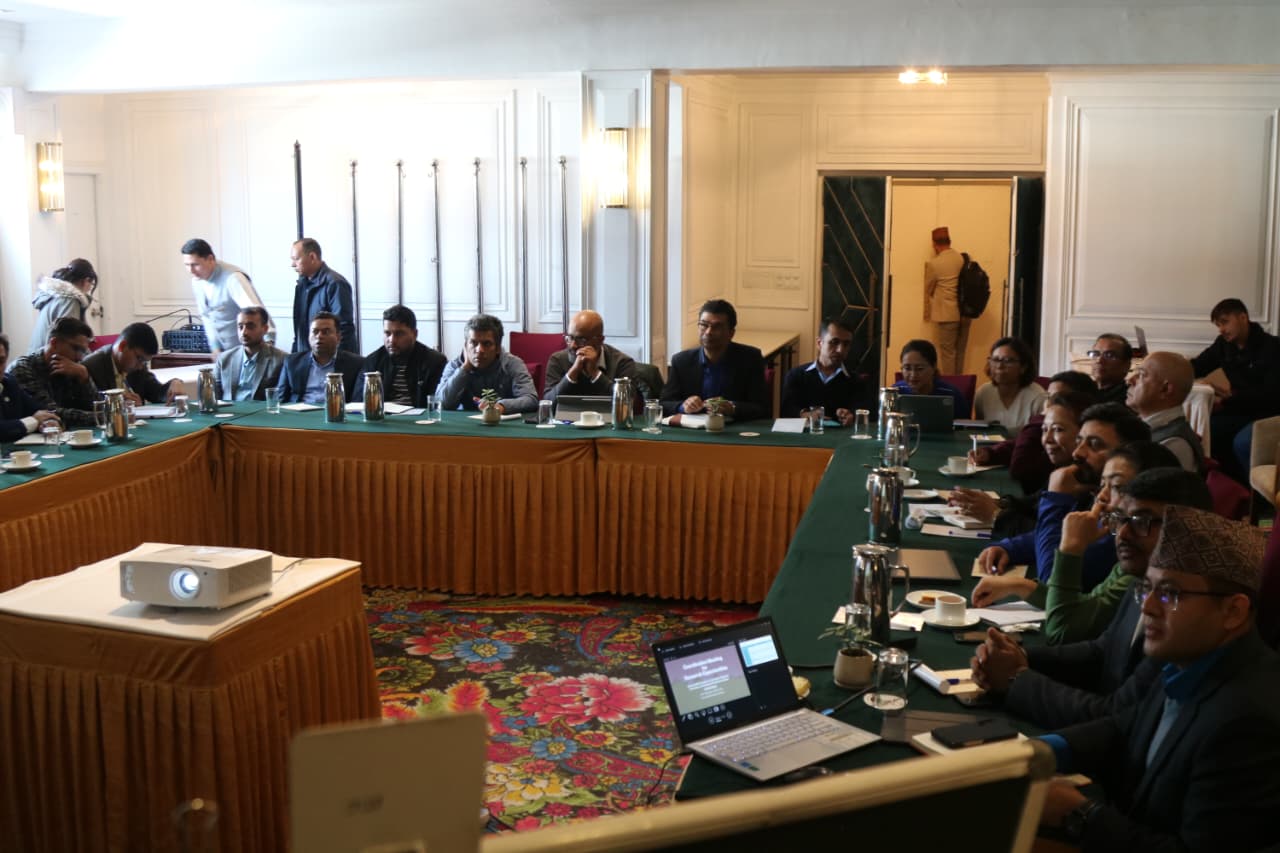
Kathmandu: A broad discussion has been held among stakeholders regarding potential collaboration for conducting studies and research in the water supply, sanitation, and hygiene sector. This is the first large-scale discussion to take place with stakeholders on research related to the water supply and sanitation sector. Although the need for research in this sector had been highlighted before, there had not been any formal gathering for discussion.
With the participation of UN agencies, development partners, academic and technical institutions, various civil society organizations, networks, and WASH experts, the National Water Supply and Sanitation, Research, Innovation and Capacity Development Centre under the Ministry of Water Supply, with support from Welt Hunger Hilfe (WHH), conducted the first-ever discussion on carrying out research studies in the WASH sector. Delivering the welcome remarks to the participants, WHH’s WASH expert, Biju Dangol, informed that studies are ongoing regarding the status of groundwater levels in the Terai-Madhesh region and the condition of spring water sources in the hilly areas.
According to the Executive Director of the Centre, Er. Ram Kumar Shrestha, the discussion was organized with the objective of collaborating with development partners to effectively use available resources and enhance research capacity for evidence-based and implementation-focused research and innovation as per the Centre’s expanded mandate. “In line with the Centre’s expanded mandate, this discussion was organized to identify available research areas, financial opportunities, and potential collaboration areas with development partners,” he said.
During the discussion, development partners shared the areas their respective organizations have been researching and expressed their views on how research-based collaboration could take place among the research institutions. Representatives from Kathmandu University and other academic institutions mentioned that various research activities on water supply and sanitation are ongoing and that collaboration with development partners could help further expand these research efforts. Participants expressed that research topics should be identified and calls for interested researchers should be made, adding that they are ready to provide financial support for such initiatives.
At the conclusion of the event, the Executive Director of the National Water Supply and Sanitation, Research, Innovation and Capacity Development Centre, Er. Ram Kumar Shrestha, said that the first discussion on potential areas of research collaboration had been highly productive. He committed to preparing a document based on the topics discussed, sharing it with everyone, and organizing a second phase of discussion to develop a work plan. “Although a budget is allocated for research at the Centre, it is very minimal. Collaboration between the government and development partners will help translate research into action,” he added.
Participants included representatives from the Ministry of Water Supply, the Department of Water Supply and Sewerage Management, educational institutions such as Kathmandu University, Pulchowk Engineering Campus, and Thapathali Campus; UN agencies such as UN-Habitat, WHO, and UNICEF; development partners including WaterAid, SNV, WHH, the Embassy of Finland, JICA, ICIMOD, IWMI, ENPHO, Oxfam, and the British Embassy; capacity development institutions such as the Council for Technical Education and Vocational Training (TITI) Bhaktapur, the Local Development Training Academy (LDTA) Jawalakhel, and the Nepal Administrative Staff College (NASC) Jawalakhel; as well as network organizations such as the Citywide Inclusive Sanitation Alliance, the Municipal Association of Nepal, the National Association of Rural Municipalities in Nepal, the Federation of Drinking Water and Sanitation Users Nepal (FEDWASUN), and the Federation of Small Town Water Supply and Sanitation Users, along with WASH experts.
 राष्ट्रिय आर्थिक गणना २०८२

_fgsotO7aFc_k4hhklj.jpeg
)


